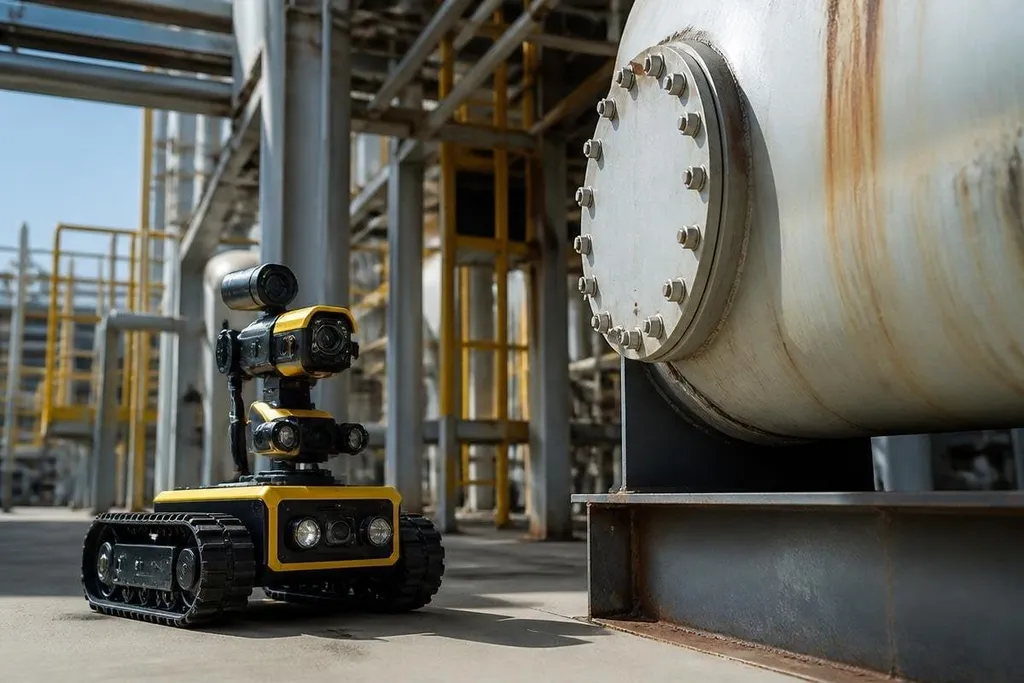
A maintenance robot can save a person from entering a hot, high, dirty, or confined space. The hard part is giving it a useful task after it arrives. Without verified deployment data, calling one approach the biggest breakthrough would be guesswork, so this watch list focuses on the tests that matter.
- Inspection: cameras, thermal sensors, LiDAR, and ultrasonic tools can find faults without contact.
- Access: climbing and flying robots can reach walls, roofs, pipes, tanks, and other difficult areas.
- Repair: the next step is acting on a fault, with a person ready to take control.
Robots that find faults before failure
The first useful step is inspection. A robot can carry a regular camera for visible damage, a thermal camera for heat changes, or an ultrasonic sensor for cracks and weak joints. Each sensor answers a different question, so a useful system needs a clear link between the sensor reading and the repair decision.
A thermal image may show a hot electrical connection. That image still needs a technician to check the load, wiring, and safe repair method. The robot reduces the time spent searching; it doesn't replace the person who decides what the fault means.
Software is also changing. Inspection software can compare a new image with an earlier image of the same pump, rail, or panel. That makes small changes easier to spot, provided the robot returns to the same position and the lighting or temperature does not distort the result.
A maintenance robot earns its place when repeated scans lead to a repair decision and a dated work record. Reports from Robot 24 can put the model, inspection site, scan interval, and result beside claims about plant use. The next test is physical: whether the robot can reach the equipment safely.
Machines that reach hard places
Access may be the clearest area to watch. A wheeled robot can inspect a flat plant floor, while a tracked robot can handle loose ground and small steps. A magnetic crawler can hold to steel surfaces, and a drone can check a roof or tall structure without scaffolding.
Each design brings a limit. Magnetic wheels need a suitable metal surface. Drones lose flight time when they carry heavier sensors. A tracked robot may cross rough ground but leave little room for a safe turning circle. The useful question is whether the robot can reach the inspection point and return with enough battery left.
Climbing robots deserve close attention because they can inspect tanks, bridges, and large storage structures from the surface. Their contact system must hold during dust, rain, paint damage, and changes in surface angle. A lab wall is a poor test for that work.
From inspection to repair
Finding a fault is easier than fixing it. Repair work needs force control, a stable base, a tool that fits the part, and a plan for mistakes. A robot arm may turn a valve in a fixed cell, yet struggle when the valve is blocked, wet, or partly damaged.
Teleoperation can fill that gap. In this setup, a person sends movement commands while the robot supplies video and sensor data. The robot handles reach and positioning; the person handles cases the software has not seen before. That arrangement still needs a safe stop, a clear view, and a reliable link.
I’d judge repair robots by the number of complete jobs they finish, not by a single clean demo. The test should include setup, tool changes, failed attempts, recovery, and the time a technician spends taking control.
What to check before a pilot
A maintenance team can screen a system with this short list before paying for a trial:
- Name the fault: set one failure type, such as a loose connection or surface crack.
- Measure access: record the distance, height, surface type, lighting, and weather.
- Check the sensor: confirm what reading marks a fault and how a technician verifies it.
- Count human steps: include setup, remote control, battery changes, and report writing.
- Test recovery: add blocked paths, weak signals, poor lighting, and a safe stop.
- Price the full job: include the robot, software, training, inspection time, and repairs.
The best maintenance robot may be the one that completes a narrow task every week, sends a clear report, and leaves a technician with fewer dangerous entries.
Until vendors publish repeatable results from working sites, that standard matters more than a dramatic demo. The next useful number is the percentage of inspections a robot can finish without human takeover.